What Is NPRA and Why Is Product Registration Important in Malaysia?
By OEM Sumber

What is the NPRA?
NPRA is an agency under Malaysia's Ministry of Health. It carries out regulatory functions relating to medicines, including certain natural product categories, and cosmetics. Its work includes evaluating applications for medicine registration, administering cosmetic notifications, monitoring product safety and quality, and supporting compliance activities. The Control of Drugs and Cosmetics Regulations 1984 form part of the relevant legal framework. The Drug Registration Guidance Document (DRGD) provides important guidance for medicinal products, while cosmetic businesses should refer to the Guidelines for Control of Cosmetic Products in Malaysia. These pathways are not identical. In particular, registration, notification and regulatory approval should not be used as though they describe the same process.
Traditional medicines, OTC medicines and cosmetics
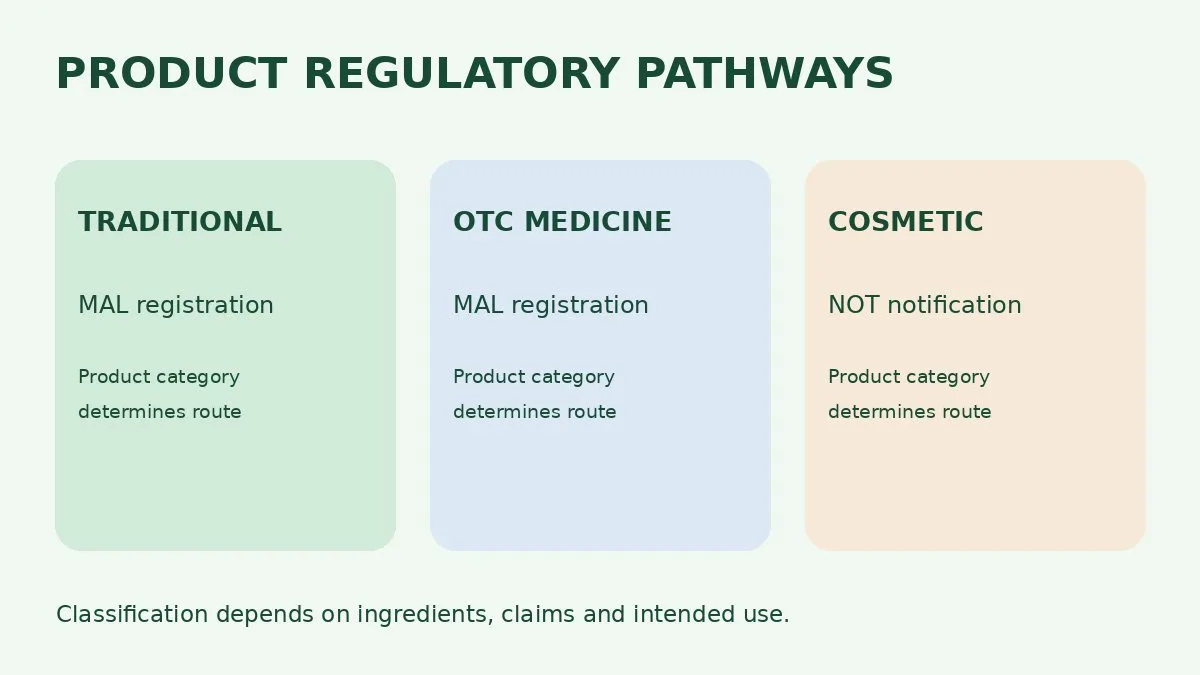
Traditional medicines may contain herbal or other natural ingredients and be associated with traditional use. Nevertheless, the correct category depends on the product as a whole, rather than a brand simply describing itself as “herbal.” Registered traditional products commonly carry a MAL number ending in T. OTC medicines are products that may be supplied without a prescription, subject to their classification and applicable controls. Some medicated creams and external antiseptic preparations may fall into this group, but not every topical oil or cream is an OTC medicine. Cosmetics generally include products intended mainly to cleanse, perfume, protect or maintain the condition of external parts of the body, such as facial cleansers, lotions and shower gels. Notified cosmetics receive a NOT number. Claims to treat disease may change the regulatory assessment.
MAL registration versus NOT notification
A MAL number identifies a registered medicinal product. Registration involves evaluation against the requirements applicable to its category, potentially including quality, safety and other supporting evidence. A NOT number identifies a notified cosmetic product. Under this notification system, the responsible company declares the product and remains accountable for compliance, including ingredient restrictions, labelling and an accessible Product Information File (PIF). A NOT number does not mean that every cosmetic has received the same pre-market assessment as a registered medicine. Neither a MAL nor a NOT number gives unlimited permission to advertise therapeutic benefits. Buyers and distributors can use official NPRA product search services to verify relevant product status.
Practical steps before an application
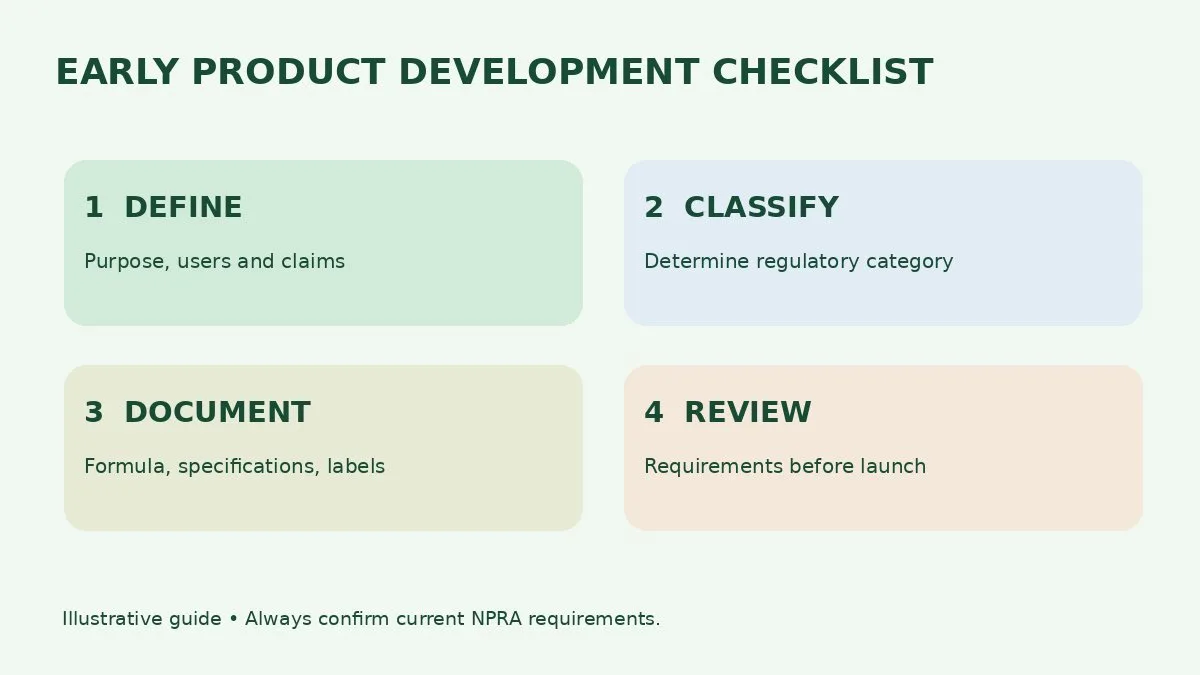
Start by preparing a concise product brief that identifies the intended purpose, target users, directions for use, complete ingredients, dosage or physical form, and proposed marketing claims. Then assess product classification: superficially similar products can follow quite different pathways. Review the suitability of ingredients and discuss evidence requirements with a competent technical adviser. Next, confirm manufacturing arrangements, specifications, necessary tests and label content. For medicinal products, applications generally involve the QUEST system and documentation aligned with the DRGD. For cosmetics, the Cosmetic Notification Holder (CNH) is responsible for notification and maintaining the PIF. Avoid ordering large quantities of printed packaging before product classification and claims have been reviewed.
Why compliance matters beyond launch
Compliance is more than obtaining a reference number. It provides a framework for consistent development, from sourcing ingredients and qualifying suppliers to manufacturing, distribution and post-market responsibilities. A sound formula can still create problems when its label contains unsupported or prohibited medical claims. Likewise, a notified cosmetic may present compliance risks if safety documentation, production records or distribution records are not maintained. Brand owners should monitor regulatory updates, cosmetic ingredient annex changes, relevant renewal obligations and customer complaints. Clear procedures also make it easier to establish which responsibilities belong to the brand owner, manufacturer, product registration holder or cosmetic notification holder.
How an OEM manufacturing partner can help
An OEM manufacturer familiar with the target category may assist with product formulation, manufacturing feasibility, packaging compatibility, technical specifications, testing arrangements and the documents needed for the relevant process. However, using an OEM manufacturer does not guarantee successful registration or notification. Regulatory responsibilities must be assigned clearly through the applicable rules and commercial agreements, including identification of the product registration holder or CNH. Sari Tani Desa Sdn. Bhd. provides OEM-related product development and manufacturing services. At the start of a project, owners can discuss the product concept, expected volumes, presentation, packaging and intended claims so that technical requirements and commercial expectations are better aligned.
Conclusion: begin with classification
A useful starting question is simple: “What regulatory category does this product actually belong to?” Once the category is established, the appropriate MAL registration, NOT notification or other requirements can be considered. Official NPRA guidance should remain the primary reference, and complex formulations or claims may warrant specialist regulatory advice. Building compliance into development from the beginning supports better decisions without overlooking consumer safety and confidence. If you are considering your own herbal, external-use medicinal or personal care brand, contact Sari Tani Desa to explore suitable OEM options and the technical preparations that may be relevant to your proposal.
#NPRA #PendaftaranProduk #MAL #NOT #ProdukTradisional #OTC #KosmetikMalaysia #OEMMalaysia
Note: General educational information; confirm current classification and requirements with NPRA.
FAQ
Information on this site is general knowledge and not a substitute for professional medical or regulatory advice. Refer to the relevant agencies for current requirements.